You have probably heard the term neurofeedback floating around parent groups or social media. Maybe another mom swears it changed everything for her son's focus. Maybe you saw a clinic offering it and wondered what it actually is.
Here is a clear, honest explanation of what neurofeedback involves, what the research says, and how to decide whether it might be worth exploring for your child.
What Neurofeedback Is
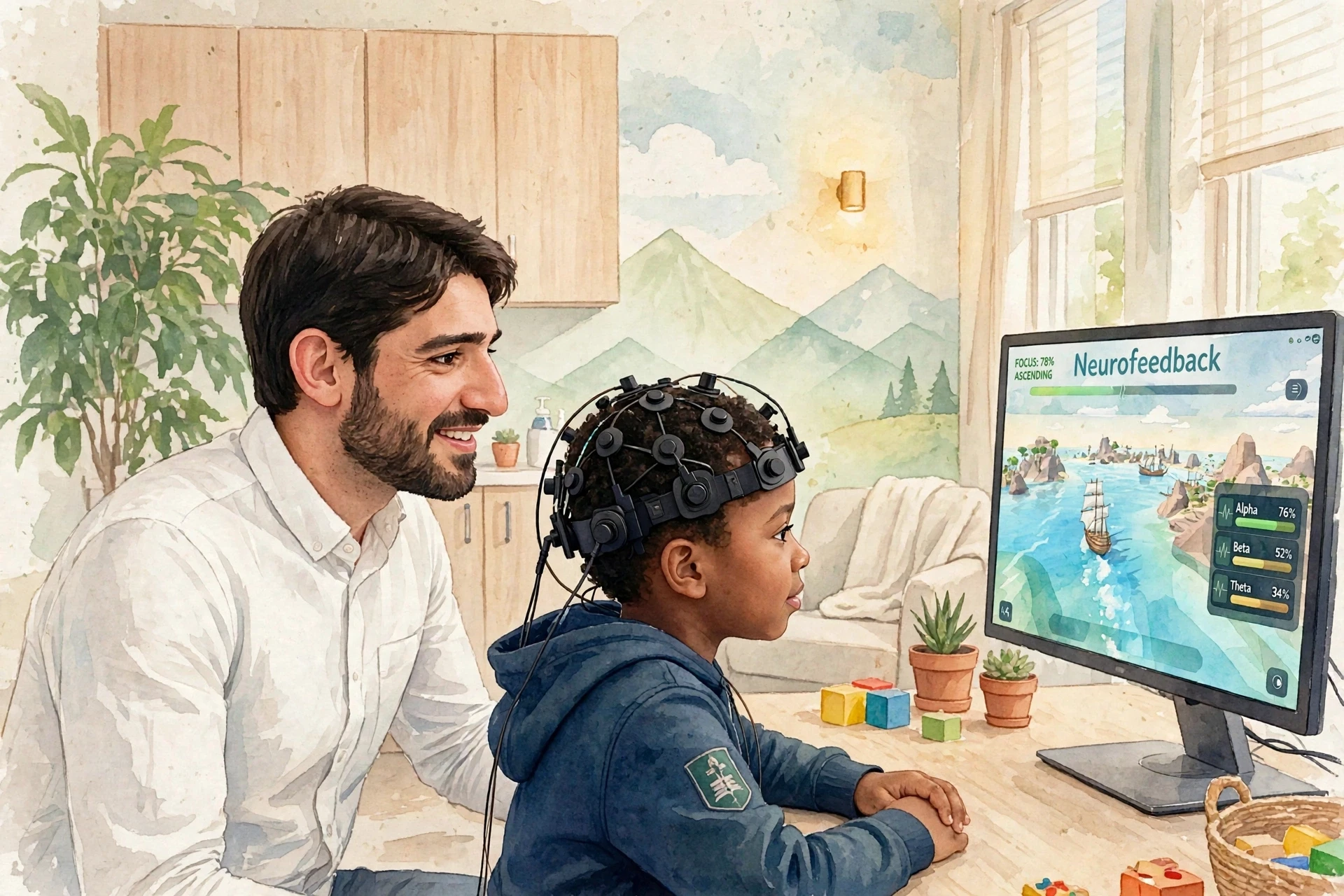
Neurofeedback is a non-invasive brain-training approach. During a session, small sensors are placed on your child's scalp to measure brain activity in real time. Your child then watches a movie, plays a simple game, or listens to music, and the activity on screen responds to their brain patterns.
Here is the key idea: the brain learns from feedback. When the screen brightens or the game progresses as brain activity shifts in the desired direction, the brain gradually learns to produce those patterns more easily on its own. Over many sessions, this training is thought to support better focus, calmer moods, and improved self-regulation.
Nothing is put into the brain. There are no electric shocks. The sensors only read activity, similar to how a thermometer reads temperature without changing it.
It Starts with a Brain Map
Before any training begins, we create a brain map. This is a detailed recording of your child's brain activity, usually taken with eyes open and eyes closed, that shows how different areas of the brain are working and communicating with each other.
Think of it as a snapshot of your child's unique brain patterns. The brain map tells us exactly which patterns to train, so the training plan is built around your child's own brain rather than guesswork. It also gives us a baseline, so we can measure real, visible progress as training continues.
What the Research Shows
Neurofeedback is best described as research-backed, which means there is a growing body of scientific studies behind it, particularly for ADHD and anxiety in children. Researchers have been studying it for decades.
That said, honest providers will tell you the evidence is promising rather than conclusive. Studies show meaningful improvements for many children with attention difficulties, but results vary from child to child, and neurofeedback is generally considered a complement to other supports rather than a standalone fix.
Be cautious of anyone promising dramatic or guaranteed results. A trustworthy clinic will talk about what the research supports, track your child's progress carefully, and be upfront that it does not work the same way for everyone.
What a Session Looks Like
A typical neurofeedback session lasts 30 to 45 minutes. Your child sits in a comfortable chair while the clinician places a few sensors on the scalp with a mild conductive paste. Most children find the setup quick and painless.
Then the training begins. Your child might watch an animation that only plays smoothly when their brain is in a calm, focused state, or play a game controlled purely by their mind. No keyboard, no controller. It feels more like entertainment than treatment, which is one reason children usually enjoy it.
Sessions are typically done once or twice a week, and a full course often involves 20 to 40 sessions. Progress is tracked over time, and the training protocol is adjusted based on how your child responds.
Who It May Help
Neurofeedback is most commonly explored for children dealing with:
ADHD and attention difficulties, including trouble focusing on schoolwork, forgetfulness, and impulsivity
Anxiety and excessive worry, from constant "what if" thoughts to test anxiety and social fears
Emotional dysregulation, such as frequent meltdowns, big reactions to small frustrations, and difficulty calming down
Sleep difficulties linked to an overactive mind, like trouble falling asleep or restless nights
Low frustration tolerance and difficulty following through on tasks
Parents often report improvements like better focus during homework, calmer evenings, fewer emotional outbursts, and easier mornings. Every child responds differently, which is why the brain map and ongoing progress tracking matter so much.
It is often used alongside other supports like therapy, skills coaching, or school accommodations. Think of it as one tool in a larger plan, not the entire plan.
Questions to Ask Any Provider
If you are considering neurofeedback, ask: What is your training and certification in neurofeedback? How do you decide on the training protocol for my child? How do you measure and track progress? How many sessions do you typically recommend before reviewing results? What happens if we do not see improvement?
Clear, specific answers are a good sign. Vague promises are not.
What to Expect Realistically
Some families notice changes like better focus on homework or calmer evenings within the first couple of months. Others see slower, subtler shifts. A few children do not respond much at all, and a good provider will tell you honestly if that seems to be the case rather than selling more sessions.
There are no major side effects reported for most children, though some feel briefly tired or headachy after early sessions. This usually fades as training continues.
An Honest Next Step
Neurofeedback is not magic, but for the right child it can be a genuinely useful part of a broader support plan. The best way to know whether it fits your child is a proper conversation with a qualified provider who will assess your child's needs first and recommend only what makes sense.
At Roots and Tales Clinic, we offer research-backed neurofeedback as part of our developmental and mental health services. Contact us to book an initial consultation at our North York or Richmond Hill location, and we will help you decide whether it is right for your family.